Jordan Loewenstein, D.C. | La Jolla Chiropractor
Foot & Ankle Pain
By Location
Pick the part of your foot or ankle that hurts. You’ll get the conditions that actually live there, the clues that tell them apart, and the specific stretches and exercises for each one.
Where Does It
Actually Hurt?
Foot and ankle pain sorts out well by location because the foot is a small area with very distinct problem spots. Heel pain in the morning is a different problem from a pebble feeling in the ball of the foot, and both are different from an ankle that keeps rolling. Pick your spot below and the list narrows quickly.
Two questions do most of the sorting here. Can you cover the sore spot with one fingertip, directly on a bone? If yes, and your training recently jumped, that is a stress fracture question and it comes before any exercise. And are the first steps in the morning the worst of the day? That single pattern identifies the most common foot problem there is.
Pick Your
Sore Spot
Pick the spot on your foot or ankle that hurts. You’ll get the conditions that live there, the clues that tell them apart, and the stretches and exercises for each one.
The Bottom of the Heel
Heel pain is the most common foot complaint there is, and most of it is one condition. The useful thing is that the exact spot on the heel, and what the first steps of the morning feel like, separate the four possibilities quickly.
Narrow It Down
Two questions do the work: are the first steps of the morning the worst part of the day, and where exactly on the heel does it hurt?
- The first few steps in the morning are the worst of the day, then it eases as you move
- It comes back after sitting for a while, and again at the end of a long day
- Pressing that spot on the inside of the heel reproduces it exactly
- It followed a jump in walking, running, or standing on hard floors
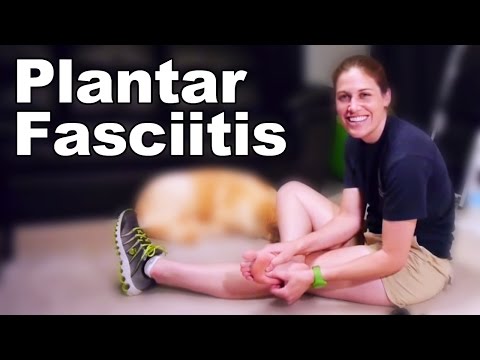
- 01Plantar Fascia StretchesHold 30s · 3x before standing
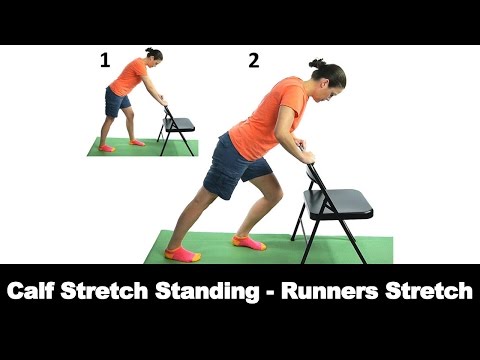
- 02Standing Calf StretchHold 30s · 3x each, straight and bent
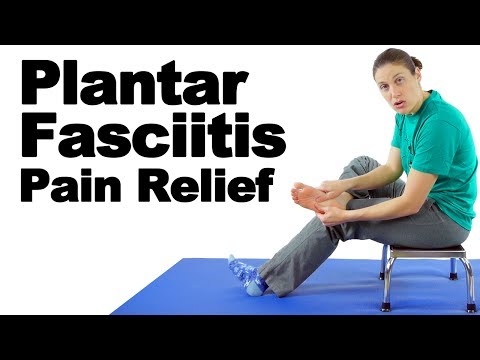
- 03Plantar Fascia Release1 to 2 min daily
- 01Heel Raises3 sets of 15
- 02Ankle Inversion3 sets of 15
- 03Ankle 4-Way With Band2 rounds
- Stretch the toes back before your first step out of bed. Do it sitting on the edge of the mattress
- Wear supportive shoes indoors. Barefoot on hard floors is the most common thing keeping it going
- Load the calf. Heel raises three times a week do more than stretching alone
- Walk barefoot on tile or hardwood while it is flaring
- Roll it aggressively on a golf ball for ten minutes. Two minutes, moderate pressure
- Expect a quick fix. Three to six months is normal, though it improves along the way
- The sore spot is dead centre under the heel, not toward the arch
- It feels like a bruise, and hard surfaces are noticeably worse
- Not especially bad first thing in the morning, which separates it from plantar fasciitis
- More common with age, higher body weight, or after a heavy heel landing
- 01Standing Calf StretchHold 30s · 3x each
- 02Ankle Alphabet1 round · 2x daily
- 01Heel Raises3 sets of 15
- 02Ankle 4-Way With Band2 rounds
- Use a cushioned heel cup. This one responds to padding more than to stretching
- Choose cushioned shoes over minimalist ones
- Reduce time standing on concrete
- Treat it as plantar fasciitis and stretch it endlessly. The location is different and so is the fix
- Walk barefoot on hard floors
- Add a rigid orthotic without cushioning. This needs padding, not arch support
- Burning, tingling or shooting rather than a dull ache
- It does not follow the classic first-steps-in-the-morning pattern
- It can be there at rest, or even at night
- Often mistaken for plantar fasciitis that is not responding to treatment
- 01Standing Calf StretchHold 30s · 3x each
- 02Plantar Fascia StretchesHold 30s · 2x, gentle
- 03Ankle Alphabet1 round · 2x daily
- 01Heel Raises3 sets of 15
- 02Ankle 4-Way With Band2 rounds
- Get it properly diagnosed if plantar fasciitis treatment has not worked after a few months
- Avoid tight shoes and firm arch supports pressing into the inside of the heel
- Keep the calf and foot strong
- Keep hammering plantar fasciitis treatment that is not working
- Roll aggressively over the sore spot. Nerves do not like compression
- Assume all heel pain is the same thing
- You sharply increased running, marching or standing in the weeks before
- Squeezing the heel from both sides is painful. That is different from pressing underneath it
- It hurts with every impact, and it is getting worse rather than better
- Common in runners, military recruits, and people with low bone density or irregular periods
- Get imaged. X-rays are often normal early, so ask about an MRI if suspicion is high
- Stop impact activity until it is cleared
- Mention the training increase and, if relevant, any nutrition or menstrual history
- Run through it
- Assume a normal X-ray rules it out
- Keep increasing mileage on the theory that it will loosen up
The first-step test. Sit on the edge of the bed, then stand and walk. If those first ten steps are the worst of the day and then it eases, that is plantar fasciitis until proven otherwise.
The thumb map. Press the inside front corner of the heel, then the dead centre. Inside corner points to plantar fasciitis. Centre points to the fat pad.
The squeeze test. Squeeze the heel bone from both sides at once. Pain with that, in someone whose mileage jumped, points to a stress fracture and means stop and get imaged.
- Shoes on indoors. Barefoot on tile or hardwood is the single thing that keeps heel pain going.
- Stretch before the first step. Pull the toes back for thirty seconds before you stand up in the morning.
- Load the calf. Heel raises three times a week. Stretching alone rarely resolves this.
- Cushion, then support. A heel cup for fat pad pain, arch support for plantar fasciitis. They are not interchangeable.
- Give it three to six months. It improves along the way, but heel pain is genuinely slow and knowing that upfront helps.
A sharp increase in training followed by heel pain that hurts when you squeeze the heel from both sides, or pain that is steadily worsening with every step. Stress fractures need imaging, not stretching.
The Achilles and Back of the Heel
The Achilles has two completely different problems depending on height, and they need opposite treatment. The one in the middle of the tendon wants eccentric heel drops off a step. The one down at the bone gets worse from exactly that. Getting this backwards is the most common self-treatment mistake in the whole foot.
Narrow It Down
Measure the height. Two inches above the heel bone is one problem. At the bone is a different one.
- You felt a pop, snap, or like someone kicked you in the back of the leg
- You cannot push off, rise onto your toes on that leg, or walk normally
- Often happens in a push-off moment in tennis, basketball or squash
- You may be able to walk, which is exactly why this gets missed
- Get seen the same day. Timing genuinely affects the treatment options
- Keep the foot pointed down and stay off it until assessed
- Mention that you felt a pop, which is the key detail
- Assume it cannot be a rupture because you can still walk. Many people can
- Stretch it or test it by hopping
- Wait to see if it settles over the weekend
- Stiff and sore for the first steps in the morning, then it warms up during activity and hurts more afterward
- You can feel a thickened or nodular section when you pinch the tendon
- It followed a jump in running volume, hill work or speed work
- Squeezing that section reproduces it
- 01Standing Calf StretchHold 30s · 3x each, straight and bent
- 02Ankle Alphabet1 round · 2x daily
- 01Eccentric Heel Drops3 sets of 15 · daily
- 02Heel Raises3 sets of 15
- 03Ankle Plantar Flexion3 sets of 15
- Do the eccentric heel drops daily. This is one of the best-evidenced protocols in all of musculoskeletal medicine
- Expect some soreness during them. That is acceptable and expected here
- Keep running at reduced volume if pain stays under 3 out of 10 and settles within 24 hours
- Rest it completely. Tendons get worse without load
- Do hill sprints or speed work while it is irritable
- Give up at week four. This protocol takes about twelve weeks
- The sore spot is at the bone itself, not two inches above it
- The backs of shoes rub and hurt, and there may be a bony bump
- Stretching the calf makes it worse rather than better. That is the key difference
- Often in slightly older or less active people, not just runners
- 01Ankle Alphabet1 round · 2x daily
- 01Heel Raises3 sets of 15 · flat ground only
- 02Ankle Plantar Flexion3 sets of 15
- 03Ankle 4-Way With Band2 rounds
- Do heel raises on flat ground, not off a step. Dropping the heel below level compresses the tendon against the bone
- Use a small heel lift in your shoe to offload it
- Choose shoes with a soft, low back
- Do eccentric heel drops off a step. That is the protocol for the mid-portion, and it makes this version worse
- Stretch the calf aggressively
- Wear stiff-backed shoes or boots that press on the bump
- Swelling and tenderness on both sides of the tendon where it meets the heel
- Squeezing side to side just above the heel is painful
- Shoe backs are unbearable
- Often alongside insertional Achilles pain
- 01Ankle Alphabet1 round · 2x daily
- 02Standing Calf StretchHold 20s · 2x, gentle only
- 01Heel Raises3 sets of 15 · flat ground
- 02Ankle Plantar Flexion3 sets of 15
- Take the pressure off. Backless shoes or a soft-backed shoe for a few weeks
- Use a heel lift to reduce tension on the area
- Ice for 10 to 15 minutes after activity
- Push into the swelling with stretching
- Wear rigid boots or dress shoes with hard heel counters
- Ignore it if it is red, hot and you are unwell. That needs medical review
The pinch test. Pinch the tendon between finger and thumb and work down it. A thickened, tender section a couple of inches above the heel is mid-portion tendinopathy. Tenderness right at the bone is insertional.
The stretch response. Does stretching the calf feel good or make it worse? Better points to mid-portion. Worse points to insertional, and it means no heel drops off a step.
The pop question. If you felt a pop or like you got kicked in the back of the leg, and you cannot rise onto your toes, get seen today. People with full ruptures often walk in unaided.
- Find out which one you have first. The treatments are opposites. This is the single most important thing on this page.
- Heel lift. A small lift in both shoes offloads the Achilles and helps almost every version of this.
- Soft shoe backs. Anything pressing on the back of the heel keeps it going.
- Keep loading it. Tendons do not recover with rest. They recover with graded load.
- Twelve weeks. That is the realistic timeline for Achilles tendinopathy, and consistency matters more than intensity.
A pop or a sensation of being kicked in the back of the leg, an inability to rise onto your toes, or a palpable gap in the tendon. Get seen the same day, and note that many people with a full rupture can still walk.
The Outside of the Ankle
Almost everything out here traces back to one event: rolling the ankle inward. The immediate question is whether anything is broken. After that, the thing that matters most is whether the sprain gets properly rehabbed, because the ones that do not become the ankles that keep rolling for years.
Narrow It Down
First: can you take four steps on it? If not, or if bone is tender, that is an imaging question before anything else.
- The ankle rolled inward, sole turning toward the other foot
- Swelling and bruising appeared within hours
- Tender in front of and below the bony bump on the outside
- Painful to walk on for the first few days
- 01Ankle Alphabet1 to 2 rounds · 2x daily, start day one
- 02Standing Calf StretchHold 30s · 3x each, once walking is comfortable
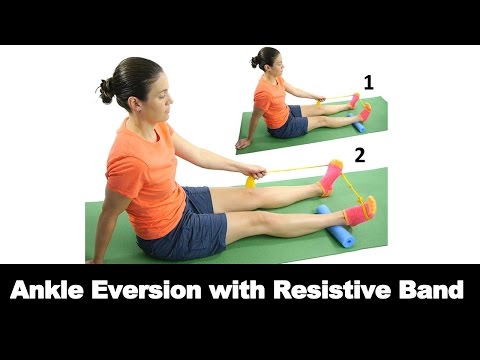
- 01Ankle Eversion3 sets of 15
- 02Ankle 4-Way With Band2 rounds
- 03Heel Raises3 sets of 15
- Start moving it early. Ankle alphabet from day one beats immobilizing it
- Prioritise the eversion exercise. That is the direction that stops you rolling it again
- Rebuild balance. Standing on one leg, then with eyes closed, genuinely reduces re-injury
- Rest it completely for two weeks. That produces a stiff, weak ankle that rolls again
- Return to sport as soon as walking is pain-free. Strength and balance come first
- Skip rehab. Around a third of ankle sprains become chronically unstable, almost always because rehab stopped early
- Tender along a cord-like line behind the bony bump, not in front of it
- Worse running on uneven ground, camber, or trails
- Often follows an old ankle sprain that was never fully rehabbed
- Turning the sole outward against resistance reproduces it
- 01Standing Calf StretchHold 30s · 3x each
- 02Ankle Alphabet1 round · 2x daily
- 01Ankle Eversion3 sets of 15
- 02Heel Raises3 sets of 15
- 03Ankle 4-Way With Band2 rounds
- Load the tendon progressively with eversion work
- Check your shoes. Worn outer edges accelerate this
- Address the old ankle sprain if there is one. It is usually the root cause
- Keep running on cambered roads or technical trails while it is irritable
- Stretch into sharp pain behind the ankle bone
- Ignore snapping over the bone, which can mean the tendon is subluxing
- The ankle has rolled more than once, and it now feels untrustworthy
- Uneven ground, kerbs and grass make you cautious
- There may be little pain between episodes
- It traces back to a sprain that never got proper rehab
- 01Standing Calf StretchHold 30s · 3x each
- 02Ankle Alphabet1 round daily
- 01Ankle Eversion3 sets of 15
- 02Ankle 4-Way With Band2 rounds
- 03Heel Raises3 sets of 15 · progress to single leg
- Train balance deliberately. Single leg stands, then eyes closed, then on a cushion. Two minutes a day
- Strengthen eversion above everything else
- Consider a brace for sport while you rebuild
- Accept it as just having weak ankles. It is trainable
- Rely on taping forever without doing the strength work
- Return to cutting sports before single-leg balance is solid
- You cannot take four steps on it, either right after the injury or now
- Tenderness directly on bone rather than on soft tissue
- Pain at the bony bump halfway down the outside of the foot after rolling it
- Rapid, significant swelling and bruising
- Get an X-ray. These are the standard rules for imaging an ankle injury and they exist because these fractures are easy to miss
- Stay off it until it is cleared
- Point out the bump on the outside of the foot specifically. That fracture is often missed on an ankle-only X-ray
- Walk it off
- Assume it is just a bad sprain because you can hobble
- Wait a week to see how it goes
The four-step test. Can you take four steps, right after the injury and now? If not, get an X-ray. That is a standard clinical rule, not caution for its own sake.
Front or behind? Tenderness in front of and below the outer ankle bone is the ligament. Tenderness behind it, along a cord, is the peroneal tendons.
Run a thumb down the outside of the foot. There is a bony bump about halfway along. Tenderness there after rolling the ankle is a fracture until an X-ray says otherwise, and it is commonly missed.
- Move it early. Ankle alphabet from day one. Immobilizing a simple sprain makes the outcome worse.
- Train eversion above all. Pushing the foot outward against a band is the direction that stops the next roll.
- Balance work counts as rehab. Two minutes of single-leg standing a day meaningfully lowers re-injury rates.
- Do not stop at pain-free. Most ankles that keep rolling stopped rehab the week the pain went.
- Brace for sport, strengthen for life. A brace is a bridge, not the fix.
You cannot take four steps on it, there is tenderness directly on bone, or there is a tender bump halfway along the outside of the foot. All three mean X-ray before rehab.
The Inside of the Ankle
The inside of the ankle carries the tendon that holds up your arch, and the nerve that supplies the sole of your foot. Problems here get mislabelled as plantar fasciitis more than anything else on this page, and one of them can permanently flatten your foot if it is left too long.
Narrow It Down
Ask whether it aches or burns. A mechanical ache points at the tendon. Burning and tingling in the sole points at the nerve.
- Tender along a cord behind the inner ankle bone, sometimes with swelling
- You cannot rise onto the toes of that leg alone, or it is much harder than the other side
- The arch may be flattening, and the foot rolling inward
- Worse with prolonged standing or walking
- 01Standing Calf StretchHold 30s · 3x each
- 02Ankle Alphabet1 round · 2x daily
- 01Ankle Inversion3 sets of 15
- 02Heel Raises3 sets of 15 · progress to single leg
- 03Ankle 4-Way With Band2 rounds
- Get this one taken seriously early. Left alone it can progress to a permanently flat foot
- Use arch support while you rebuild the tendon
- Train single-leg heel raises. That is both the test and the treatment
- Ignore a collapsing arch
- Keep walking long distances in unsupportive shoes
- Assume it is just plantar fasciitis. The location behind the inner ankle bone is the tell
- Burning, tingling or numbness in the sole, rather than a mechanical ache
- Often worse at night or after prolonged standing
- Tapping behind the inner ankle bone can send a zing into the foot
- It can follow a sprain, or come with a flat foot
- 01Ankle Alphabet1 round · 2x daily
- 02Standing Calf StretchHold 30s · 3x each
- 01Ankle Inversion3 sets of 15
- 02Heel Raises3 sets of 15
- 03Ankle 4-Way With Band2 rounds
- Get it diagnosed. Nerve problems in the foot are frequently mislabelled as plantar fasciitis
- Support the arch, which reduces tension on the nerve
- Avoid tight ankle braces and straps pressing on that area
- Roll or dig into the area behind the inner ankle bone
- Ignore progressive numbness or weakness
- Keep treating it as a fascia problem if it burns and tingles
- The ankle rolled outward, which is the unusual direction
- Tenderness and swelling below the inner ankle bone
- Often occurs with a higher-energy injury, so a fracture must be ruled out
- Painful to push the foot outward
- 01Ankle Alphabet1 to 2 rounds · 2x daily
- 02Standing Calf StretchHold 30s · 3x each once comfortable
- 01Ankle Inversion3 sets of 15
- 02Ankle 4-Way With Band2 rounds
- 03Heel Raises3 sets of 15
- Get an X-ray. Inner ankle sprains carry a higher chance of an associated fracture
- Start gentle motion early once cleared
- Rebuild strength and balance as with any sprain
- Assume it is a routine sprain. This direction is less common and more suspicious
- Skip imaging if you cannot bear weight
- Return to sport before balance is restored
- The soreness runs along a stretch of several inches, not one pinpoint spot
- It came on after increasing running, or switching surfaces or shoes
- Sore at the start of a run, sometimes easing, then worse after
- Pinpoint pain on one small spot is different and suggests a stress fracture
- 01Standing Calf StretchHold 30s · 3x each, straight and bent
- 02Ankle Alphabet1 round · 2x daily
- 01Ankle Dorsiflexion3 sets of 15
- 02Heel Raises3 sets of 15
- 03Ankle 4-Way With Band2 rounds
- Cut running volume about 30 percent and hold there for two to three weeks
- Build calf and shin strength. Heel raises plus dorsiflexion work
- Check shoe age and running surface
- Run through worsening pain
- Ignore it if the pain becomes pinpoint on one spot. That is a stress fracture question
- Come back to full mileage in one step
The single heel raise. Stand on the painful leg alone and rise onto your toes ten times. If you cannot, or the arch collapses, that points strongly at the posterior tibial tendon and it deserves early attention.
Ache or burn? A pulling, mechanical ache is tendon. Burning, tingling or numbness spreading into the sole is nerve.
Diffuse or pinpoint? On the inner shin, a diffuse ache over several inches is shin splints. Pain you can cover with one fingertip is a stress fracture until proven otherwise.
- Support the arch. Almost everything in this zone improves when the arch is supported while you rebuild.
- Single-leg heel raises. Both the test and the treatment for the main problem here.
- Watch the arch shape. Compare both feet standing. A flattening arch on one side needs looking at promptly.
- Cut the mileage, not the movement. About 30 percent for two to three weeks, then rebuild.
- Burning means nerve. And nerves do not respond to rolling and digging.
An arch that is visibly flattening, an inability to do a single-leg heel raise, pinpoint pain on one spot of the shin bone, or numbness spreading through the sole. All of those need an in-person assessment.
The Top of the Foot and the Toes
Forefoot pain has one important dividing line: can you cover the sore spot with a single fingertip, directly on a bone? If yes, that is a stress fracture question and it comes before everything else. If the pain is spread out or between the toes, the list is much friendlier.
Narrow It Down
The question that matters: pinpoint on a bone, or spread across an area?
- You can cover the sore spot with one fingertip, directly on a bone
- It followed a sharp increase in running, walking, marching or dancing
- Swelling on top of the foot, and it hurts with every step
- It is getting worse week over week rather than fluctuating
- Get imaged. Early X-rays are often normal, so ask about an MRI if suspicion is high
- Stop impact activity until cleared
- Mention any recent training increase, and any nutrition or menstrual history if relevant
- Run through it
- Assume a normal X-ray clears it
- Keep training on the theory it is just a bruise
- It feels like a pebble or a fold in your sock under the ball of the foot
- Burning or numbness radiating into the toes
- Tight or narrow shoes and high heels make it much worse
- Taking the shoe off and rubbing the foot gives relief
- 01Standing Calf StretchHold 30s · 3x each
- 02Plantar Fascia StretchesHold 30s · 3x
- 03Ankle Alphabet1 round daily
- 01Heel Raises3 sets of 15
- 02Ankle 4-Way With Band2 rounds
- Change your shoes. A wide toe box is most of the treatment
- Try a metatarsal pad placed just behind the ball of the foot, not under it
- Get it confirmed if it is not settling. Injections help some people
- Wear narrow or pointed shoes, or heels, while it is symptomatic
- Put a pad directly under the sore spot. It goes behind it
- Ignore progressive numbness in the toes
- A bruised, burning ache under the ball of the foot
- Worse barefoot on hard floors, and after long walking or standing
- Often with calluses under the same area
- No specific pebble sensation between the toes
- 01Standing Calf StretchHold 30s · 3x each
- 02Plantar Fascia StretchesHold 30s · 3x
- 03Plantar Fascia Release1 to 2 min daily
- 01Heel Raises3 sets of 15
- 02Ankle 4-Way With Band2 rounds
- 03Ankle Plantar Flexion3 sets of 15
- Cushion the forefoot and use a metatarsal pad
- Loosen the calves. Tight calves push load onto the forefoot with every step
- Rotate shoes and avoid thin, flat soles
- Walk barefoot on hard floors
- Wear heels while it is sore
- Ignore a pinpoint spot on one bone, which is a different problem
- Aching across the top of the foot, worse where shoes press
- Lifting the toes upward against resistance reproduces it
- It followed tight lacing, a shoe change, or a jump in hill walking
- No pinpoint bony tenderness, which separates it from a stress fracture
- 01Standing Calf StretchHold 30s · 3x each
- 02Ankle Alphabet1 round · 2x daily
- 01Ankle Dorsiflexion3 sets of 15
- 02Heel Raises3 sets of 15
- 03Ankle 4-Way With Band2 rounds
- Loosen the laces, or skip an eyelet over the sore spot
- Reduce hill walking for a couple of weeks
- Load it gradually with dorsiflexion work
- Keep lacing tightly over the tender area
- Assume top-of-foot pain is always a stress fracture, though do check for a pinpoint bony spot
- Push through worsening pain
The one-finger bone test. Press along each long bone on top of the foot. Pinpoint tenderness on one bone, in someone whose training jumped, is a stress fracture until imaging says otherwise.
The squeeze test. Squeeze the forefoot from both sides. A click or a shot of pain into the toes suggests a neuroma.
Under or between? Pain under the ball of the foot is metatarsalgia. A pebble sensation between the third and fourth toes is a neuroma.
- Widen the toe box. More forefoot problems resolve with shoe changes than with anything else.
- Metatarsal pad goes behind. Just behind the ball of the foot, not under the sore spot.
- Loosen the laces. Skip an eyelet over any tender area on top.
- Stretch the calves. Tight calves drive load into the forefoot on every single step.
- Respect pinpoint bone pain. That is the one thing here that does not wait.
Pinpoint tenderness on one bone on top of the foot after a training increase, swelling with every step, or pain that is worsening week over week. Stress fractures need imaging, and early X-rays are often normal.
Stretches &
Exercises
Every movement referenced above, in one place, with a video demo. Nothing here should reproduce sharp pain. Work in the range that feels clean and let it expand week by week. Two rules govern all of it, and they are spelled out right after this section.
Stretches and mobility
Daily is fine. For heel pain, do the toe pull before your first step out of bed.
 Watch demo
 Watch demo
 Watch demo
 Watch demo
 Watch demo
Strengthening
Every other day, except the Achilles heel drops which are done daily. A light band is all you need.
 Watch demo
 Watch demo
 Watch demo
 Watch demo
 Watch demo
 Watch demo
 Watch demo
How To Know If
You’re Doing Too Much
These two rules apply to every program on this page, wherever your pain is. They are the same ones I give patients in the office, and they replace the guesswork about whether to push through something.
Some discomfort during these exercises is normal and even useful. Pain above about a 3 out of 10 is not. If an exercise pushes past that, reduce the range, the weight, or the number of reps.
You should be back to your normal baseline within 24 hours. If it is more sore the next morning, you did too much. Cut the volume roughly in half and build back from there.
Signs You Should
Skip the Exercises
Most foot and ankle pain responds well to load management, shoe changes and progressive strengthening. These are the exceptions, and several of them need imaging first.
Foot & Ankle
Questions
That pattern is close to diagnostic for plantar fasciitis. The tissue on the bottom of the foot tightens overnight, so the first ten steps are the worst of the day and it eases as you move. Pull your toes back and hold for thirty seconds before you stand up, wear supportive shoes indoors, and add calf strengthening. Heel pain that is not worse in the morning is more likely fat pad pain or a nerve.
It matters a great deal, because the treatments are opposite. Mid-portion Achilles tendinopathy sits two to three inches above the heel bone and responds to eccentric heel drops off a step. Insertional Achilles pain sits right at the bone, and dropping the heel below level compresses the tendon and makes it worse. For insertional pain, do heel raises on flat ground only and use a small heel lift.
The standard rule is whether you can take four steps on it, either immediately after the injury or now. If you cannot, or if there is tenderness directly on bone rather than soft tissue, get imaged. Also check the bony bump about halfway along the outside of the foot, because a fracture there is commonly missed on an ankle-only X-ray.
Because the first sprain was probably never fully rehabbed. Around a third of ankle sprains go on to chronic instability, almost always because rehab stopped when the pain stopped. The fix is strengthening eversion, pushing the foot outward against a band, plus balance training. Two minutes a day of single-leg standing, progressing to eyes closed, measurably reduces re-injury.
That sensation, like a folded sock or a stone under the ball of the foot with burning into the toes, is typical of a Morton's neuroma, usually between the third and fourth toes. Narrow shoes and heels make it worse. A wide toe box and a metatarsal pad placed just behind the ball of the foot, not under it, resolve many cases.
The distinguishing feature is how spread out it is. Shin splints ache along several inches of the inner shin. A stress fracture is pinpoint, meaning you can cover it with one fingertip, and it tends to worsen week over week rather than fluctuate. Pinpoint bone pain after a training increase should be imaged, and early X-rays are often normal.
Both, but strengthening is the part most people skip. Stretch the toes back before your first step in the morning, and stretch the calf with the knee both straight and bent. Then add heel raises three times a week. Calf strength changes the load going through the fascia with every step, and it does more over time than stretching alone.
Plantar fasciitis commonly takes three to six months, though it improves along the way. Achilles tendinopathy runs about twelve weeks on a proper heel drop protocol. Ankle sprains are usually functional within weeks but need three months of strength and balance work to stop them recurring. Stress fractures need six to eight weeks off impact.
Yes. Foot and ankle problems are usually load problems, and load comes from above, so the hip, knee and the way you walk all matter. Dr. Loewenstein assesses the whole chain, uses hands-on care to restore ankle and foot motion, and builds the loading program that resolves it. Treatment starts on the first visit at the UTC San Diego office.
Find Out What’s
Actually Going On
Narrowing it down by location gets you most of the way there. A hands-on exam gets you the rest of the way, and treatment starts on visit one.