Jordan Loewenstein, D.C. | La Jolla Chiropractor
Is Cracking Your Own
Neck Or Back Bad?
Short version: there is no good evidence it is wearing your joints out. But the fact that you keep needing to do it is telling you something worth listening to. Here is what the sound actually is, the one situation that is genuinely worth taking seriously, and what to do instead of chasing the pop all day.
What That Crack
Actually Is
It is not bone hitting bone, and nothing is snapping back into place. The sound is a gas cavity suddenly opening up inside the fluid of the joint as the two surfaces pull apart. It is a pop of low pressure, not a collision.
In 2015 a research team did something nobody had managed before. They put a finger inside an MRI scanner and filmed a joint cracking in real time, at three frames a second, while it happened.
What they saw settled a forty-year argument. The sound landed at the exact moment a gas-filled cavity appeared in the joint fluid — not when one collapsed. So the explanation most people grew up with, that a bubble is bursting, has it backwards. The bubble is being born, not popped.
It was a small study — ten joints — but it is the only one that has actually watched the thing happen rather than reasoned about it from the outside.
It is not bone grinding on bone. That is a different noise entirely — a dry, repeatable crunch that happens every single time you move the joint. A crack happens once and then will not happen again for a while.
It is not a bone going back in. A stiff segment starting to move again is a change in motion, not a change in position. That distinction matters, because it is the motion you are trying to get back — not some perfect alignment.
It is not a score. Loud does not mean it worked and silent does not mean nothing happened. Plenty of joints loosen up without making any noise at all.
There is also a built-in delay. Once a joint has cracked, it usually will not crack again for around twenty minutes, because the gas has to dissolve back into the fluid first.
That is why the second attempt never feels as satisfying as the first — and why people end up twisting harder to get a sound that is not available yet. Which is the part actually worth paying attention to.
Is It Actually
Damaging Anything?
There is no good evidence that cracking a joint wears it out. The best study anyone has done compared 215 people and found no link at all to arthritis. The more useful question is not whether the crack is harmful — it is why you keep needing one.
The arthritis question is mostly answered. Researchers looked at 215 people aged 50 to 89, 135 of whom had arthritis confirmed on X-ray. Habitual knuckle crackers made up 18% of the arthritis group and 21% of the group without it. No difference. If anything the crackers came out very slightly ahead, which is almost certainly noise.
There is also the famous doctor who cracked the knuckles on one hand every day for fifty years and left the other hand alone as a control. Both hands looked the same at the end of it. One person is not evidence, but it is a good story and it points the same direction.
All of that research is on hands. Nobody has run the same study on necks and backs, which means two things are true at once.
“Cracking causes arthritis” has no evidence behind it. That claim gets repeated constantly and there is nothing supporting it.
“Cracking your own spine is completely harmless” has no study behind it either. What follows is reasoning about how the joints actually work, and I will say so where that is the case.
The Part That Actually Matters
This is the idea the rest of the page is built on.
When you crank your own neck, you do not get to choose which joint moves. You apply a broad twist across a whole region and the force goes wherever it meets the least resistance — which is whichever segment is already the loosest.
The stiff one, the one that started all this, does not move at all. It cannot. It is the stiffest thing in the chain, so the force routes around it every time.
So here is the loop most people are stuck in. The segment that needed movement stays stuck. The segment beside it, already the most mobile, gets stretched again. You get the sound and a few minutes of relief because the muscles let go briefly. Then the guarding comes back, because the actual restriction never changed, and twenty minutes later you are reaching for your head again.
That is not a cracking problem. That is a stiffness problem wearing a disguise.
These are rare, and none of them are about cracking specifically — they are worth knowing whatever you do with your neck. Sudden severe neck pain or headache unlike anything you have had before. Visual changes, slurred speech, trouble swallowing, numbness down one side of the face, or sudden dizziness and unsteadiness.
You may have read that neck manipulation causes strokes. The largest study on this covered more than 100 million person-years and found that people who had one of these strokes were just as likely to have seen their family doctor beforehand as a chiropractor. The most likely explanation is that the injury was already underway, and neck pain and headache are how it announces itself — so people go and see whoever they can get in with. Either way it is very rare, and recognising the warning signs above matters far more than avoiding movement.
Where Chiropractic
Helps
If you are cracking your own neck several times a day, the joint that needs to move is the one you keep missing. An adjustment is aimed at that specific segment — found first, then treated. That is the difference, and it is the whole difference.
Same sound. Completely different event.
When you do it yourself, there is no target. You rotate the whole neck to end range, add a bit of speed, and take whatever sound you get. You have no way of knowing which joint made the noise, and it is almost never the one you were aiming for.
When I do it, finding the right joint is most of the work. I check how far your neck actually moves and where it runs out. I run orthopaedic tests to sort out what is involved and what is not. Then I work through the segments by hand until I find the one where the motion genuinely stops.
Only then does the contact go on. One joint, one direction, one depth. The joint that has not been moving is the joint that gets moved.
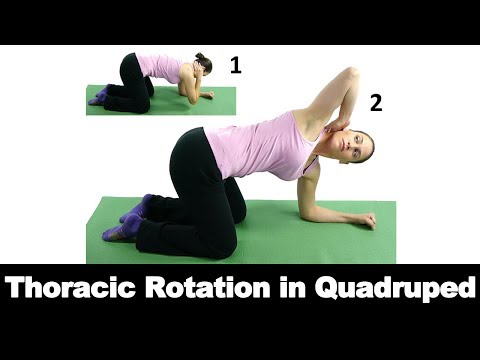
The other half of it is the mid-back. Most stiff necks are not really neck problems — the upper back has stopped rotating and extending, and the neck has been quietly covering for it. That is the region most people cannot reach at all on their own, and it is usually where the relief actually comes from.
What To Do
Instead
The urge comes back because the stiffness comes back. Tier 1 gives the joints the movement they are actually asking for. Tier 2 wakes up the muscles that are supposed to be holding your head up. Tier 3 builds the endurance that stops the whole thing seizing again by Wednesday. Give it two weeks before you judge it.
Tier 1 — Give It The Movement It Wants
Every day, five minutes. Do these the moment you feel the urge instead of reaching for your head. Slow and repeated beats hard and once.
 Watch demo
 Watch demo
 Watch demo
 Watch demo
 Watch demo
 Watch demo
 Watch demo
Tier 2 — Wake Up What Is Meant To Hold It
Every day. These are the reason the range you gain in Tier 1 sticks around. None of them should hurt.
 Watch demo
 Watch demo
 Watch demo
 Watch demo
Tier 3 — Build The Endurance
Three times a week. This is the tier people skip, and it is the one that decides whether you are still doing this in six months. Stiffness that keeps returning is usually a fatigue problem.
 Watch demo
 Watch demo
 Watch demo
Do This,
Not That
Neck Cracking
Questions
There is no evidence that it damages the joint. The research on habitual joint cracking has never found a link to arthritis, and the sound itself is just gas coming out of solution in the joint fluid.
What is worth paying attention to is the frequency. If you need to do it several times a day, something is genuinely stiff and you are not reaching it — the relief keeps wearing off because the actual restriction never changed.
No study has found that. The best one compared 215 people aged 50 to 89 and found habitual crackers made up 18% of the group with arthritis and 21% of the group without — no difference at all.
That research was done on hands rather than necks, so it is not a perfect match. But the claim that cracking causes arthritis has never had anything behind it.
Two things happen at once. Taking a joint to the end of its range fires off a burst of signals from the nerve endings in the joint capsule, and that briefly turns down both the pain signal and the muscle guarding around it. The neck genuinely does feel looser for a few minutes.
That relief is real. It is just short, because relieving the guarding is not the same as restoring the movement that caused it.
Because when you crack your own neck you cannot pick which joint moves. The force goes to whichever segment is already the loosest, and the stiff one — the one that started this — does not budge.
So you get the sound, a few minutes of relief while the muscles let go, and then the tightness returns, because nothing about the restriction actually changed. That loop is the reason the program on this page exists.
It is very rare, and the link is genuinely disputed. The largest study on it looked at more than 100 million person-years and found people who had this kind of stroke were just as likely to have seen their family doctor beforehand as a chiropractor — which suggests the injury was already underway and the neck pain it caused is what sent them looking for help.
What matters more than avoiding movement is knowing the warning signs: sudden severe neck pain or headache unlike anything you have had before, visual changes, slurred speech, numbness on one side of the face, or sudden dizziness. Those are same-day symptoms.
Yes, and the difference is in the assessment rather than the sound. I check your range of motion, run orthopaedic tests, and work through the segments by hand to find the one where the movement genuinely stops. Then the contact goes on that joint, in that direction.
When you do it yourself there is no target — you twist a whole region and take whatever noise you get. Same sound, completely different event.
On its own, no. Joints that pop when you stand up, twist or stretch are extremely common and almost never mean anything, especially when there is no pain attached.
It is worth looking into if the noise comes with pain, if it happens in the same spot every single time you move a particular way, or if it started after an injury.
Give the joint what it is asking for in a way that actually reaches it. Slow end-range rotations several times a day, mid-back mobility work, and then enough strength that the neck stops stiffening by mid-afternoon. That is the three-tier program above.
Most people notice the urge dropping off within a week or two once the restricted segment starts moving properly. If it is not shifting, that is a good reason to have someone find the joint you are missing.
Stop Chasing The Pop
Find The Joint That Is Stuck
If you are cracking your neck several times a day, one segment has stopped moving and you keep missing it. Ten minutes of examination finds which one. Then it gets treated, and you get the program above so the range holds. Evening and Sunday appointments available.