Jordan Loewenstein, D.C. | La Jolla Chiropractor

Exercise & Stretch Library

Sciatica
Stretches &
Exercises

Clinician-recommended nerve glides, stretches, and exercises to calm sciatic nerve pain — plus the dos & don’ts that matter and how chiropractic care helps when self-care isn’t enough. From a San Diego practice that finds the cause first.

Clinician-Recommended
Gentle Nerve Glides
UTC San Diego — Near UCSD
Calm the Nerve
Glides & gentle mobility first
Move Often
Don’t sit for long stretches
Ease, Don’t Force
No pushing into leg pain
Know the Red Flags
Weakness or numbness = get seen

What Helps
Sciatica

The best moves for sciatica gently free the sciatic nerve and release the muscles pressing on it — nerve glides, the figure-4 piriformis stretch, and press-ups (if they ease your leg pain) are good starting points, plus short walks and changing position often. Avoid prolonged sitting and deep forward bends. If you have leg weakness, foot drop, or numbness in the groin, get evaluated right away.

40%
of people experience sciatica at some point in their lives
4–6
weeks for most sciatica to settle with gentle, active self-care
#1
staying gently active beats bed rest for nerve-related back pain
85%
of sciatica is managed without surgery

Sciatica isn’t really a diagnosis — it’s a symptom of an irritated sciatic nerve, the large nerve that runs from your lower back through the glute and down the leg. When something compresses or tensions it, you feel that unmistakable burning, shooting, or tingling pain down the leg.

The usual culprits are a lumbar disc bulge, a tight piriformis muscle, or spinal stenosis. Because the fix depends on the cause, the goal of these exercises is to gently calm the nerve and mobilize the structures around it — not to force a stretch through the pain.

Start gently and pay attention to your leg. A good sign is “centralization” — the pain pulling back out of the leg and toward the spine. If a movement pushes pain further down the leg, ease off and read the “when to see a professional” section below. This page is a starting point, not a diagnosis.

Glide, Don’t Yank
Nerve glides should feel like gentle flossing, never a hard stretch. A few easy reps is enough.
Watch for Centralization
Moves that pull pain out of the leg toward the back are good. Moves that push it down the leg are not.
Break Up Sitting
Sitting compresses the nerve. Stand, walk, or change position every 20–30 minutes.

Recommended
Stretches

Gentle nerve glides and hip stretches to calm the sciatic nerve and release what’s pressing on it. Move slowly and stay out of sharp leg pain. Tap any card to watch a demo.

Sciatic nerve glide demonstrationWatch demo
01
Sciatic Nerve Glide
Seated, slowly straighten the affected leg and flex your ankle while looking up, then bend the knee and lower the chin. Floss the nerve gently — never into pain.
10–15 gentle glides · 1–2x
Figure-4 piriformis stretch demonstrationWatch demo
02
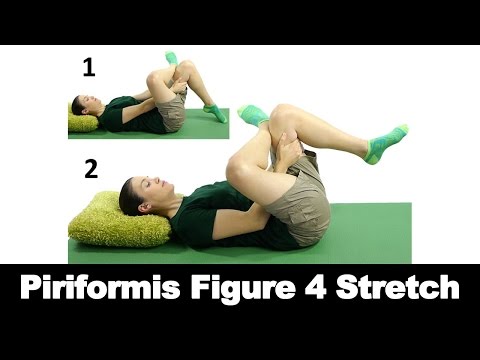
Figure-4 Piriformis Stretch
On your back, cross the affected ankle over the opposite knee and gently pull the lower thigh toward you. Targets the piriformis, a common sciatic culprit.
Hold 20–30s · 2–3x each side
Piriformis knee to opposite shoulder stretch demonstrationWatch demo
03
Knee to Opposite Shoulder
On your back, draw the bent knee across toward the opposite shoulder until you feel a stretch deep in the glute. A great second angle for the piriformis.
Hold 20–30s · 2x each side
Single knee to chest stretch demonstrationWatch demo
04
Single Knee-to-Chest
Lying down, gently draw one knee toward your chest to ease the lower back and glute. A calming, low-stress mobility stretch between the nerve glides.
Hold 20–30s · 2–3x each side
Supine trunk rotation stretch demonstrationWatch demo
05
Lying Trunk Rotation
On your back, knees bent and together, let both knees drop gently to one side. Eases tension through the lower back and glutes around the nerve.
Hold 20s · 2x each side
Supine hamstring stretch with strap demonstrationWatch demo
06
Supine Hamstring Stretch
On your back, loop a strap around your foot and gently raise the leg with a slight knee bend. Eases hamstring tightness that often accompanies sciatica — keep it gentle, no nerve tension.
Hold 20–30s · 2x each side

Recommended
Exercises

Strengthening the glutes and deep core takes pressure off the sciatic nerve and helps keep it from flaring again. Add these once the sharp leg pain has begun to settle.

Glute bridge exercise demonstrationWatch demo
01
Glute Bridge
On your back, knees bent, squeeze your glutes and lift your hips into a straight line. Strong glutes unload the lower back and piriformis.
Hold 3–5s · 10–12 reps
Clamshell hip exercise demonstrationWatch demo
02
Clamshell
On your side, knees bent, lift the top knee while keeping your feet together. Builds the hip stabilizers that protect the nerve and ease piriformis strain.
10–15 reps each side
Bird dog exercise demonstrationWatch demo
03
Bird-Dog
On hands and knees, brace your core and extend the opposite arm and leg level with your back. Builds spinal stability without compressing the nerve.
8–10 reps each side
Prone press up McKenzie extension demonstrationWatch demo
04
Prone Press-Up
Lie face down and press up onto your forearms or hands, hips down. Often centralizes disc-related sciatica — use only if it eases, not worsens, leg symptoms.
8–10 reps, ease into it
Dead bug core exercise demonstrationWatch demo
05
Dead Bug
On your back, slowly lower the opposite arm and leg while keeping your low back pressed down. Safe, controlled core work that protects the spine.
8–10 reps each side
06
Daily Walking
One of the best things for sciatica. Short, frequent walks keep the nerve mobile and the spine moving. Start with 10 minutes and build up — the bay path counts.
10–20 min daily
Pain shooting down your leg? Let’s find the source.
Book an Exam in San Diego

Dos &
Don’ts

Sciatica is sensitive to how you move through the day. These habits help calm the nerve — and avoid the ones that keep it fired up.

Do
Keep moving gently — short walks and position changes calm the nerve.
Do nerve glides gently — think flossing, not stretching.
Favor movements that pull pain back toward your spine (centralization).
Stand up every 20–30 minutes if you sit for work.
Use heat to relax the glute and back before stretching.
Stay consistent — gentle and daily beats hard and occasional.
Don’t
Sit for long stretches — it compresses the nerve and stiffens the hip.
Do deep forward bends or straight-leg toe-touches — they tension the nerve.
Push any move that sends pain further down the leg.
Do heavy lifting or deadlifts during an active flare.
Bed rest for days — it stiffens up and slows nerve recovery.
Ignore foot drop, weakness, or groin numbness — get seen promptly.

How Chiropractic
Helps Sciatica

Sciatica has several possible causes, and the right treatment depends on which one is yours. That’s where a proper exam changes everything.

01
Find the Source
An orthopedic and neurological exam pinpoints whether it’s a disc, the piriformis, or stenosis driving your sciatica — so care is targeted.
02
Decompress & Mobilize
Gentle, technique-matched care — such as flexion-distraction for a disc — reduces pressure on the nerve root.
03
Release the Muscle
Soft-tissue work and Active Release Technique calm a tight piriformis and the glute muscles that crowd the nerve.
04
Glide & Strengthen
You leave with the right nerve glides and strengthening for your cause — matched to your body so relief sticks.
What the research says
For sciatica from a lumbar disc, guidelines support non-surgical care and staying active as first-line management, with most cases improving without surgery. Combining hands-on care with nerve mobilization and targeted exercise helps people return to normal activity sooner.

When to See
a Professional

Most sciatica settles with gentle, active care. But certain signs mean you should be evaluated promptly rather than stretch through it. See a professional if you have:

Progressive leg weakness or foot drop (trouble lifting the foot)
Numbness or pain in both legs
Sciatica that began after a fall or accident
No improvement after about two weeks of self-care
Leg pain that keeps getting worse or stops you sleeping
Unexplained fever or weight loss with the back/leg pain
Seek emergency care for loss of bladder or bowel control, or numbness in the saddle/groin area (possible cauda equina syndrome).

Questions About
Sciatica

The questions patients ask most about exercising with sciatica — answered directly.

What is the fastest way to relieve sciatica?

Gentle movement usually relieves sciatica faster than rest. Sciatic nerve glides, the figure-4 piriformis stretch, and press-ups (if they ease your leg pain) are good starting points, along with short walks and changing position often. Avoid prolonged sitting and pushing into sharp leg pain.

Should I stretch or rest with sciatica?

Gentle stretching and movement are better than rest for most sciatica. Prolonged bed rest tends to slow recovery, while careful nerve glides, hip stretches, and walking help calm the irritated nerve. Stop anything that sharply increases pain down the leg.

Is walking good for sciatica?

Usually yes. Gentle walking keeps the spine and hips moving and the nerve mobile, and it often eases sciatica. Keep walks short and comfortable at first and build up gradually. If walking sharply worsens leg pain, ease off and get evaluated.

What makes sciatica worse?

Common aggravators are prolonged sitting, deep forward bending and toe-touch stretches that put the nerve on tension, heavy lifting, and staying in one position too long. Pacing activity, alternating positions, and gentle nerve glides usually help.

How long does sciatica last?

Most sciatica improves within 4 to 6 weeks with gentle movement and self-care. If your leg pain is not improving, is getting worse, or you notice numbness or weakness, an evaluation helps identify the source — disc, piriformis, or stenosis — and the right plan.

Can a chiropractor help with sciatica?

Yes. A chiropractor can identify what is compressing or irritating the sciatic nerve and combine hands-on care — such as flexion-distraction for a disc or soft-tissue work for the piriformis — with nerve glides and a tailored exercise plan. Dr. Loewenstein performs a thorough orthopedic and neurological exam on the first visit at the UTC San Diego clinic.

Stop the Pain
Down Your Leg

These glides and stretches are a great start. For a plan matched to what’s actually compressing your nerve, book an exam — treatment starts on visit one.

5151 Shoreham Place, Suite 175 · UTC San Diego, CA 92122 · Near UCSD
This page is general educational information and is not a substitute for a professional diagnosis or individualized medical advice. Stop any exercise that sends pain further down your leg or causes weakness or numbness. If you have an acute injury or any of the warning signs listed above, consult a qualified healthcare provider before starting these stretches.