Jordan Loewenstein, D.C. | La Jolla Chiropractor
Buffalo Hump &
Dowager’s Hump
The bump at the base of the neck goes by two names, and they are not actually the same thing. Plenty of people looking at one have no pain at all — they just do not like how it looks, or they can see where it is heading and want to stop it.
This covers both: how to tell which hump you have, the program that changes it, how to keep it from getting worse, and when it needs a proper look.
What That Hump
Actually Is
Most people use “buffalo hump” and “dowager’s hump” to mean the same bump at the base of the neck. Clinically they are two different things, and telling them apart decides what you should do about it. One is a soft pad of fat sitting on top of the spine. The other is the spine itself curving further forward than it should.
It is worth two minutes to work out which one you are looking at, because the answers are completely different. Exercise reshapes a curve. It does not shift a fat pad.
1. A true buffalo hump — a fat pad. Properly called a dorsocervical fat pad. It sits over the bones rather than being made of them, and it feels soft, squishy and movable.
Most often it comes with general weight gain, but it is also a known effect of long-term steroid medication and of a few hormonal conditions. It does not respond to posture exercises, because there is nothing structural to correct.
2. A dowager’s hump — a structural curve. The upper back is genuinely curved further forward than normal, and it has become fixed that way.
In older adults this usually traces back to bone density loss and small compression fractures in the vertebrae. In teenagers it can be a growth-related condition. It feels firm and bony, and it does not straighten out when you try.
3. A postural hump — the flexible kind. By far the most common version in people under sixty, and the one most desk workers have.
The curve is real but it is not fixed — you can straighten it when you think about it, and it disappears when you lie flat. This is the one that responds best to everything on this page.
A normal upper back has some forward curve built in, usually somewhere between twenty and forty-five degrees. It is only called excessive past about forty-five. So a bit of roundness is not a problem — the question is how much, whether it is fixed, and whether it is getting worse.
That is a completely reasonable reason to be here, and it is probably the most common one. A lot of people notice the shape in a photo or a shop window long before anything starts aching, and want to head it off.
You are in the best possible position. The curve is almost certainly still flexible, which is the version that responds most, and you are starting while there is the most to protect. Everything on this page works the same whether or not it hurts — the mobility work, the strength work and the habits are identical.
The one thing worth knowing is that appearance follows structure, and structure follows strength. So the changes people can actually see come from the loading in Tier 3, not from stretching or from standing up straighter. Give it a few months and photograph your side profile monthly rather than checking the mirror daily.
Which One
Do You Have?
Four checks, about two minutes, and you will know which of the three you are dealing with. You need a mirror or a phone camera, and a bit of floor.
Press on it. The most useful thing you can do. Soft, squishy and movable over the bones underneath means a fat pad. Firm, unmoving, and you can feel the bumps of the spine running through it means you are feeling bone.
If it is soft and you can pinch it, the exercises on this page will not change it and something else is going on.
Lie flat on your back on the floor. No pillow. Does the upper back settle towards the floor, or does your head stay propped up in the air with a gap under your neck? If it flattens out, the curve is flexible and that is the best news on this page. If your head will not reach the floor, the curve has some fixed component.
Stand tall and try to straighten it out. Lift the chest, draw the shoulder blades gently back and down. If the hump visibly reduces in the mirror, it is postural. If nothing changes no matter how hard you try, it is structural.
Ask how long it has been there. A curve that has crept in over years is a different problem to a lump that appeared over a few months. New and growing quickly is worth getting looked at rather than exercised.
A hump on its own is almost never something to worry about. It is the company it keeps that matters, and there are a few specific things worth ruling out before you start exercising.
Are you on steroid medication? Long-term prednisone or similar — whether for asthma, arthritis, an autoimmune condition or repeated injections — is a well-recognised cause of a fat pad at the base of the neck. Worth raising with whoever prescribes it. Do not stop taking it on your own.
Has the hump come with any of these? A rounder or flushed face, wide purple stretch marks on the abdomen, bruising very easily, difficulty getting out of a chair without pushing up with your arms, or newly diagnosed high blood pressure or diabetes.
Individually these mean little. Together with a new fat pad, they are a cluster worth a blood test to rule out a hormonal cause. It is uncommon, but it is checkable and worth checking.
Any sudden mid-back pain, especially after the menopause or if you have been told you have thinning bones, deserves prompt attention. So does noticing you have lost height, or pain that is constant and does not ease when you lie down.
None of this is meant to alarm you. The overwhelming majority of neck humps are posture and time. But these are the few things worth excluding first, and a short conversation settles most of them.
Where Chiropractic
Helps
This is one of the areas where the research lines up well with what hands-on care is good at — and it is worth saying that plenty of people who come in about a hump are not in any pain. The upper back stiffens, the shoulders round forward, and the shape follows.
Treatment restores the movement that has been lost, which is what lets the strength work actually change the shape rather than fight a stiff spine the whole way.
A neck hump is rarely just a neck problem. The stiff segments usually sit lower — in the upper and mid thoracic spine — while the pain and tension show up higher, at the base of the neck and across the shoulders. That is why treating only where it hurts tends to disappoint.
Thoracic spine manipulation has solid support. A pooled analysis of eight randomised controlled trials covering 457 people found meaningful reductions in pain after adjusting the thoracic spine, in patients whose complaint was neck pain.
Treating the stiff area below the symptoms is a well-recognised approach, and it works. If you have no pain, the same treatment is doing something else useful — giving you back the extension range you need before the strengthening can change anything.
Combined care performs better than either half alone, and it lasts. A 2022 randomised trial of 80 people with chronic neck pain and an excessive upper back curve ran thoracic adjustments, soft tissue work and a strengthening program together.
The group that got the full combined program improved more on pain and disability, and still held those gains a year later, where the comparison group had drifted back towards where they started.
And the exercise side has genuinely good evidence too — a controlled trial in adults averaging seventy years old, all with a measurable excess curve, produced a real reduction in that curve over six months of structured strengthening. That is covered in the program below.
The pattern across all of it is consistent. Hands-on treatment plus the right exercises beats either one on its own, and the combination is what the clinical guidelines recommend.
Open It Up,
Then Build It
The order matters. Restore the movement first, wake up the muscles that hold you upright, then load them properly. Doing the strength work into a stiff upper back is why so many people grind away at rows for months without much changing.
This is not a quick fix and it is not meant to be. The trial that produced a genuine, measurable reduction in the curve ran three sessions a week for six months, in adults averaging seventy years old who all had a real excess curve to begin with.
That is the commitment level that shifts structure. The good news is that the neck and shoulder symptoms usually settle a long way before that.
Daily, five to eight minutes. The upper back has to be able to extend before anything else is worth doing. Move on to Tier 2 once you can lie flat on the floor with your head down comfortably — but keep doing these, they stay useful.
 Watch demo
 Watch demo
 Watch demo
 Watch demo
 Watch demo
Five or six days a week. The muscles that hold you upright have usually been switched off for years, and they need reminding before they can be loaded. These should feel easy and boring within two to three weeks — that is your signal to add Tier 3.
 Watch demo
 Watch demo
 Watch demo
 Watch demo
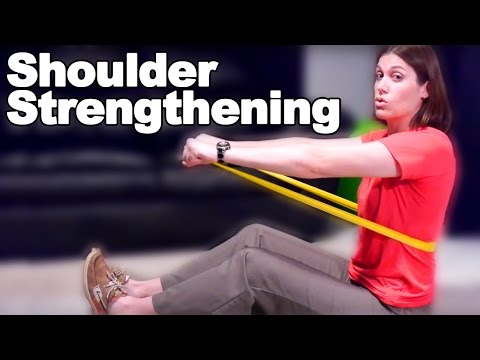
Three days a week, with a band or light weights. This is the tier that changes the shape rather than just the symptoms, and it is the one people skip. Add weight slowly and keep the shoulder blades doing the work.
 Watch demo
 Watch demo
 Watch demo
Keep Tier 1 as a warm-up for Tier 3 and you have a session that takes about twenty-five minutes. Progress by adding a heavier band or a small weight when the top of the rep range feels controlled, not by adding more exercises to the list.
Do This,
Not That
The exercises take twenty minutes. The rest of the day is where the curve is actually being shaped. Nothing on the right is harmful — it is just where people put effort that would pay off better elsewhere.
How It Happens,
And How To Stop It
A neck hump is not a single event. It is three slow processes stacking up over years, and each one is worth understanding because each one is addressable. Catching it while the curve is still flexible is far easier than reversing it later.
1. Time spent folded forward. Screens, phones, driving, reading. The tissues at the front shorten, the ones at the back lengthen and weaken, and the position slowly becomes the path of least resistance. This is the part everyone knows about and it is real — but on its own it produces a flexible curve, not a fixed one.
2. The muscles running either side of the spine giving up. These are your postural endurance muscles, and they are use-it-or-lose-it. When they fatigue you sink forward. When they weaken over years, you sink forward and stay there. This is the single most modifiable piece and it is what the whole program above is aimed at.
3. Changes in the bones and discs themselves. Discs lose height at the front, vertebrae can wedge slightly, and if bone density has dropped, small compression fractures can occur without a memorable injury.
This is what turns a flexible curve into a fixed one, and it is why the same hump in a thirty-year-old and a seventy-year-old are different problems.
The rate of change is slower than people fear. In large studies following adults over years, the curve increases by roughly half a degree a year on average — so it is not something that runs away from you overnight.
But it does compound, and the two things that most reliably predicted faster progression were lower bone density and disc degeneration.
That gives you a clear list of what actually holds the line.
Keep the back extensors strong. Not just doing the exercises for a few weeks, but keeping some pulling and rowing in your training permanently. Strength here is the difference between holding an upright position all day and only when you remember.
Protect your bone density. Resistance training and weight-bearing exercise, sensible calcium and vitamin D, and a bone density scan if you are postmenopausal or have risk factors. Bone density is one of the few things that predicts whether the curve progresses, and it is very much modifiable.
Break up the flexed hours. The screen height and the get-up-every-40-minutes habit are unglamorous and they matter more than anything else on this page.
Deal with it while it is still flexible. If the curve straightens when you lie flat, you are working with something that responds. That is the window worth using.
Two related programs if the same desk is causing trouble elsewhere: Posture Fixes for Desk Workers and Students for the workstation setup, and Anterior Pelvic Tilt if the low back and hips are involved too.
Neck Hump
Questions
If it is a postural curve, yes — that is the version that responds best, and it can improve substantially. If it is a structural curve that has been there for decades, you can expect a real but more modest change in the shape, along with a bigger change in how it feels and moves.
A controlled trial in adults averaging seventy years old produced a measurable reduction in the curve over six months of structured strengthening. If it is a soft fat pad, exercise will not shift it and the answer lies elsewhere.
Press it. A fat pad is soft, squishy and moves over the bones underneath — you can usually pinch it. Bone is firm and unmoving, and you can feel the knuckles of the spine running through it.
If it is soft, ask whether you are on any steroid medication, because that is a common and well-recognised cause. If it is firm, it is a curve and the program on this page is built for it.
Yes, and this is an area where the research supports it well. Adjusting the stiff segments of the upper and mid back has been shown across eight randomised trials, covering 457 people, to meaningfully reduce neck pain — and neck pain is what most people with a hump actually come in for.
A 2022 randomised trial combining thoracic adjustments, soft tissue work and a strengthening program found the combined group still holding its improvements a year later. Treatment restores the movement, calms the symptoms, and makes the exercise work productive. The two together outperform either on its own.
A true fat pad will not reshape with posture exercises, because there is no joint or muscle problem to correct. What matters is finding out why it is there.
If it came with general weight gain, weight loss will reduce it like fat anywhere else. If you are on long-term steroid medication, that is worth a conversation with your prescriber.
If it appeared quickly alongside other changes such as a rounder face, easy bruising or new high blood pressure, that cluster is worth a blood test. Exercise is still worth doing for everything else it gives you, just not as a treatment for the pad itself.
Start now, because you are in the easiest position to be in. A curve that has not yet caused symptoms is almost always still flexible, and flexible curves respond far better than fixed ones. Do Tier 1 daily and get into Tier 3 within a month or so — the loading is what actually protects the shape over years.
Alongside that, the three habits that matter most are screen height, getting up every 30 to 45 minutes, and keeping some pulling and rowing in whatever training you do. Bone density is worth paying attention to as well, since low bone density is one of the strongest predictors of a curve getting worse.
Stiffness and neck ache usually ease within two to four weeks, and that is often the thing people care most about. Visible change in the shape takes longer — the trial that measured a real reduction ran for six months.
Photograph your side profile once a month rather than checking the mirror daily, because month-to-month is the timescale where you will actually see it.
Pillow height matters more than pillow brand. A tall stack pushes the head forward for eight hours a night, which quietly reinforces the position you are working against all day.
One supportive pillow that keeps the head level with the spine is the goal. Some people find lying flat on their back with a rolled towel running lengthwise along the spine for ten minutes is a useful daily reset.
No. The best trial on this recruited adults averaging seventy years old who all had a genuine excess curve, and it still produced a measurable reduction over six months.
Younger and more flexible curves change more, but older spines respond too — and the gains in how you move and feel matter regardless of what the angle does. A follow-up study found the improvements were still holding three years later.
If the hump is new or growing quickly, if you are on long-term steroid medication, if it has come alongside changes like a rounder face, easy bruising or new high blood pressure, or if you have had sudden mid-back pain or noticed you have lost height.
Also worth an exam if you simply want to know which of the three types you have before committing three months to a program, because that answer changes what you should be doing.
Find Out Which Hump
You Are Working With
Ten minutes of hands-on assessment tells you whether the curve is flexible or fixed, where the stiffness actually sits, and which tier to start at. From there it is treatment to restore the movement and a program built for your spine rather than a generic list. Evening and Sunday appointments available.