Jordan Loewenstein, D.C. | La Jolla Chiropractor

\n\n
Exercise & Stretch Library

Pregnancy
Stretches &
Exercises

The stretches and gentle exercises I give pregnant patients for low back, hip, pelvic and sciatic pain, with video. Safe in every trimester, with the few things to avoid spelled out.

Webster Certified
Safe every trimester
UTC San Diego — Near UCSD
Go Gentle
Range of motion, not intensity
Breathe
No breath-holding or straining
Off Your Back
Side-lying or propped after 20 weeks
Know the Signs
Bleeding, contractions, leaking = call your OB

What Helps
Pregnancy Pain

Most pregnancy back, hip and pelvic pain responds to gentle mobility, a few targeted stretches, and keeping the glutes and deep core working as the belly grows. Cat-cow, standing pelvic tilts, wide-knee child’s pose and the seated figure-4 are the starting points. Avoid lying flat on your back for long after about 20 weeks, deep twists, and anything that makes you hold your breath. Call your OB first for bleeding, contractions, fluid leaking, or dizziness.

Pregnancy changes the mechanics fast: the belly pulls the low back into a deeper arch, the hormone relaxin loosens the pelvic joints, and the glutes and deep core are asked to stabilise a pelvis that is suddenly more mobile. That is why low back ache, pain at the back of the pelvis (the SI joints), pubic bone pain and sciatica-type leg pain are so common, especially in the second and third trimesters. The fix is not to stretch harder. It is gentle motion for the stiff parts, a little strength for the parts holding you up, and positions that take the load off. These are the ones I actually give my pregnant patients. If any of them makes the pain travel down your leg or sharpen, stop and read the red flags below.

Range, Not Intensity
Relaxin makes your joints more mobile than usual. Stretch to a comfortable range and stop; forcing it is how pregnant patients get hurt.
Side-Lying Is Your Friend
After about 20 weeks, keep flat-on-your-back work short or prop up on pillows. Side-lying and hands-and-knees cover almost everything.
Move Through the Day
Change position every 30 to 45 minutes, sit with support behind the low back, and walk daily. Still beats stiff.

Recommended
Stretches

Gentle mobility for the low back, hips and pelvis. Slow, within a comfortable range, breathing throughout. Tap any card to watch a demo.

Cat-Cow demonstrationWatch demo
01
Cat-Cow
On hands and knees, round the back toward the ceiling, then let the belly drop and lift the chest. Small range, slow, breathing with it. The single best move for a stiff pregnancy low back.0 slow cycles · 2–3x a day
Standing Pelvic Tilt demonstrationWatch demo
02
Standing Pelvic Tilt
Back against a wall or standing freely, gently tuck the tailbone under to flatten the low back, hold a breath, release. Teaches the deep core to counter the belly’s pull on the arch.0 reps · hold 3s
Wide-Knee Child’s Pose demonstrationWatch demo
03
Wide-Knee Child’s Pose
Knees wide to make room for the belly, big toes together, sit back toward the heels and walk the hands forward. Decompresses the low back and opens the hips without any load.
Hold 30–60s · 2x
Seated Figure-4 demonstrationWatch demo
04
Seated Figure-4
Sitting tall, cross one ankle over the opposite knee and hinge forward from the hips. Targets the piriformis and deep glutes, the usual source of pregnancy sciatica. Belly-friendly because you never lie down.
Hold 20–30s · 2x each side
Half-Kneeling Hip Flexor Stretch demonstrationWatch demo
05
Half-Kneeling Hip Flexor Stretch
One knee down on a cushion, the other foot forward, tuck the pelvis and shift gently forward until the front of the back hip stretches. Tight hip flexors drag the pelvis forward and load the low back; this undoes it.
Hold 30s · 2x each side
Doorway Chest Stretch demonstrationWatch demo
06
Doorway Chest Stretch
Forearms on the door frame, step through until the chest and front of the shoulders open. Breast and belly weight round the upper back forward; this is the counter-move for the upper-back and rib ache.
Hold 30s · 3x

Recommended
Exercises

Strength for the muscles holding a changing pelvis. Light, controlled, and nothing that makes you strain or hold your breath. Add once the sharp pain has settled.

Glute Bridge demonstrationWatch demo
01
Glute Bridge
On your back, knees bent, squeeze the glutes and lift the hips in a straight line. Strong glutes take load off the low back and SI joints. Keep sets short; after 20 weeks, prop the upper back on pillows or skip if you feel light-headed.0–12 reps · 2 sets
Bird-Dog demonstrationWatch demo
02
Bird-Dog
Hands and knees, extend the opposite arm and leg while the back stays still. Deep core and glute control with zero pressure on the belly. Hands-and-knees is the safest position in pregnancy, and this is the best exercise in it.–10 reps each side · 2 sets
Clamshell demonstrationWatch demo
03
Clamshell
Side-lying, knees bent, lift the top knee while the feet stay together. The hip stabilisers that keep the pelvis level when you walk and that calm pregnancy sciatica.2–15 reps each side · 2 sets
Wall Sit demonstrationWatch demo
04
Wall Sit
Back flat on the wall, slide down to a comfortable partial squat and hold. Builds the legs and glutes for labour and for carrying the extra weight, without any balance risk.
Hold 20–30s · 3x
Pelvic Floor Lifts demonstrationWatch demo
05
Pelvic Floor Lifts
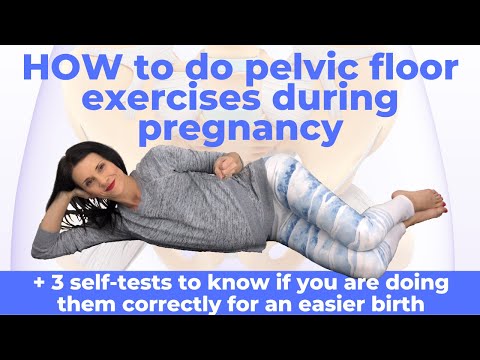
Gently lift and squeeze the pelvic floor as if stopping urine midstream, hold, then fully relax. The relax is as important as the lift. Supports the pelvis now and recovery later.0 lifts · hold 5s · 2–3x a day
Seated Band Row demonstrationWatch demo
06
Seated Band Row
Sitting tall with a band around your feet or anchored in front, pull the elbows back and squeeze the shoulder blades. Counters the forward pull on the upper back and eases the rib and shoulder ache.2–15 reps · 2 sets
Pelvic or back pain that is not settling? Let’s take the load off.
Book an Exam in San Diego

Dos &
Don’ts

Pregnancy is forgiving of gentle movement and unforgiving of forcing. These habits keep you comfortable.

Do
Move a little, often: change position every 30 to 45 minutes and walk daily.
Stretch to a comfortable range and stop. Relaxin is already doing the stretching.
Breathe through everything. If you are holding your breath, the exercise is too hard.
Sleep on your side with a pillow between the knees and one under the belly.
Use a small cushion behind the low back when sitting, and get up to stand often.
Tell me and your OB about any new pain. It is almost always treatable.
Don’t
Lie flat on your back for long stretches after about 20 weeks; prop up or go side-lying.
Deep twists, crunches or anything that bulges the belly outward.
Hot yoga or anything that overheats you.
Bounce or force into a stretch, especially the hips and inner thighs.
Push through pain at the pubic bone; that needs assessment, not stretching.
Ignore bleeding, contractions, fluid leaking, dizziness or a sudden calf pain: call your OB.

How I Treat
Pregnancy Pain

Pregnancy changes how I work, not whether I can help. The visit is adapted to the trimester and the belly, and I coordinate with your OB whenever anything is unclear. Read more: is chiropractic safe during pregnancy, and how can it help?

01
Find the Source
Range of motion, orthopaedic testing and a look at how the pelvis is sitting tell me whether it is the SI joints, the low back, the pubic joint or the piriformis. Most pregnancy pain is one of those four.
02
Pregnancy-Safe Adjusting
Adjustments are done side-lying or on a table with a drop-away section for the belly, gentle, no twisting through the abdomen, in every trimester.
03
Settle the Muscles
Soft tissue work on the glutes, piriformis, hip flexors and the muscles along the low back that are working overtime. Heat where it helps.
04
Two or Three Things for Home
You leave with the two or three moves on this page that fit your pattern, not the whole list, and a position strategy for sleep and sitting.
What the research says
Guidelines from ACOG support regular moderate exercise in uncomplicated pregnancies and recommend avoiding prolonged flat-on-the-back positions later in pregnancy. Reviews of manual therapy for pregnancy-related low back and pelvic pain report it as low-risk when adapted, with most patients improving alongside exercise. I keep every technique inside those limits.

When to See
a Professional

Most pregnancy aches respond to gentle care. These are the signs that mean an OB or urgent assessment first.

Vaginal bleeding, fluid leaking, or regular contractions
Severe or sudden headache, vision changes, or swelling of the face and hands
Dizziness, chest pain or shortness of breath with mild activity
Pain, redness or swelling in one calf
Numbness, tingling or weakness in a leg that is getting worse
Pubic bone pain that makes walking or stairs very difficult
Call your OB or go to labour and delivery for bleeding, contractions, fluid leaking, or decreased baby movement. Call 911 for chest pain, trouble breathing, or a severe sudden headache.

Pregnancy
Questions

The questions patients ask most — answered directly.

Is it safe to see a chiropractor while pregnant?

Yes, with pregnancy-adapted care. I treat pregnant patients in every trimester: side-lying or belly-accommodating positions, gentle techniques, no twisting through the abdomen. I coordinate with your OB if anything is unclear, and your OB should know you are coming in.

What stretches are safe during pregnancy?

Cat-cow, standing pelvic tilts, wide-knee child's pose, the seated figure-4, a half-kneeling hip flexor stretch and a doorway chest stretch cover most pregnancy aches. Keep every stretch to a comfortable range, breathe, and avoid deep twists.

Why does my lower back hurt so much during pregnancy?

The growing belly pulls the low back into a deeper arch, relaxin loosens the pelvic joints, and the glutes and deep core have to stabilise a more mobile pelvis. Low back ache, SI joint pain and sciatica-type leg pain are the common results, especially in the second and third trimesters.

Can I lie on my back to exercise while pregnant?

For short periods early on, yes. After about 20 weeks the weight of the uterus can press on the large vein returning blood to the heart, so keep flat-lying work brief, prop the upper back on pillows, or switch to side-lying and hands-and-knees versions. If you feel light-headed on your back, roll to your left side.

What helps sciatica during pregnancy?

Most pregnancy sciatica is the piriformis and glutes squeezing the nerve rather than a disc. The seated figure-4, clamshells, daily walking and side-sleeping with a pillow between the knees help most. If the pain travels below the knee with numbness or weakness, get it assessed.

How many visits do pregnant patients usually need?

Depends on the pain and the trimester. Many patients come weekly while the pain settles, then every two to four weeks through the rest of the pregnancy as the body keeps changing. Each visit is about 30 minutes after the first.

Pregnant and hurting?

Pregnancy-safe chiropractic care in UTC San Diego. Webster certified, every trimester, most insurance accepted.

5151 Shoreham Place, Suite 175 · UTC San Diego, CA 92122 · Near UCSD
This page is general information for uncomplicated pregnancies and is not a substitute for advice from your OB or midwife. Stop any exercise that causes pain, bleeding, contractions, dizziness or shortness of breath and contact your provider.